Kitchen Measurement Conversions: How to Scale Recipes Without Ruining Dinner
Whether you're doubling a family recipe for a holiday gathering or cutting a casserole in half for a quiet weeknight meal, recipe scaling is one of the most useful kitchen skills you can learn. While the math may seem simple at first, successful scaling involves more than multiplying ingredients. Cooking times, measurements, and ingredient behavior can all change when a recipe grows or shrinks.
Fortunately, a few basic principles can help you scale recipes confidently. Understanding conversion factors, measurement systems, and common scaling pitfalls allows home cooks to adjust recipes without sacrificing flavor, texture, or consistency.
What Is a Conversion Factor and Why Does It Matter?
Every successful recipe adjustment starts with a conversion factor. A conversion factor is simply the number used to increase or decrease every ingredient in a recipe by the same proportion. It ensures that ingredient ratios remain balanced regardless of how many servings you're preparing, helping preserve the flavor, texture, and consistency of the original dish.
To find the conversion factor, divide your desired yield by the recipe's original yield. If a recipe serves four people and you need to serve eight, your conversion factor is 2. If the same recipe needs to serve only two people, the factor becomes 0.5. Once calculated, that number is applied consistently to every ingredient, creating a reliable framework for scaling the recipe.
This simple step prevents one of the most common scaling mistakes: adjusting ingredients unevenly. When all ingredients are multiplied by the same factor, recipes maintain the balance intended by the original developer. Whether you're cooking for one person or feeding a crowd, the conversion factor serves as the foundation for accurate recipe scaling.
The Right Tools to Have Before You Start Scaling
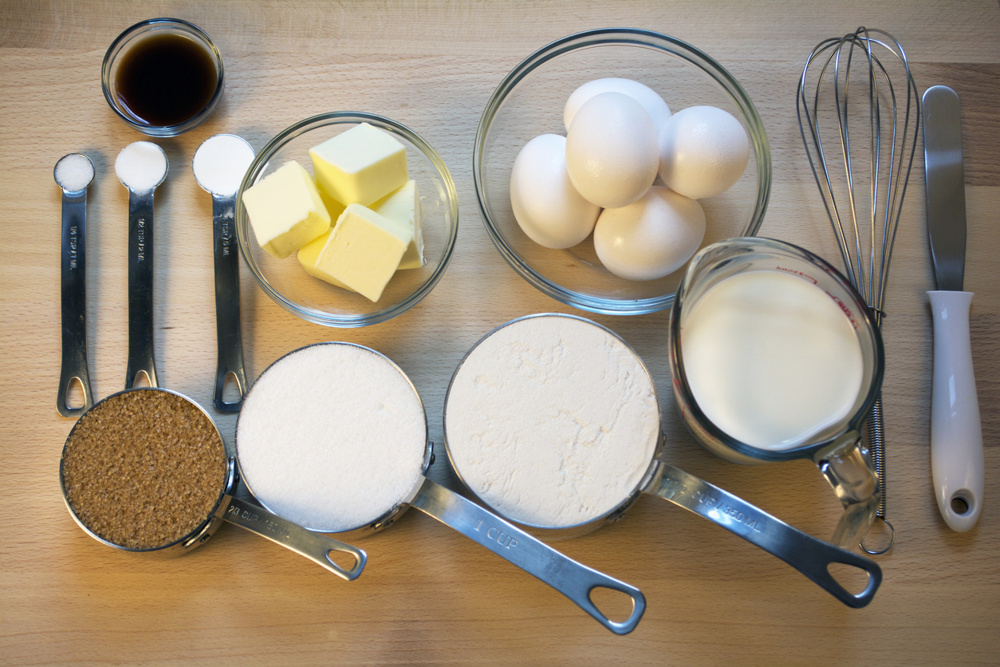
Accurate recipe scaling becomes much easier when you have the right tools available. While measuring cups and spoons remain useful, certain tools dramatically improve precision when recipes become larger or more complex. Having everything ready before you begin also helps streamline the cooking process.
A digital kitchen scale is often the most valuable piece of equipment for scaling recipes. Weighing ingredients eliminates many of the inconsistencies associated with volume measurements, particularly for flour, sugar, and other dry ingredients. A calculator can also help reduce math errors when working with unusual conversion factors or fractional measurements.
Preparation is equally important. Writing down scaled ingredient amounts before cooking prevents confusion and allows you to focus on the recipe itself. A few minutes of planning can save significant frustration later, especially when preparing large batches or recipes with numerous ingredients.
Weight vs. Volume Measurements: Which Is More Accurate?
One of the most important concepts in recipe scaling is understanding the difference between weight and volume. Volume measurements describe how much space an ingredient occupies, while weight measurements describe how heavy it is. Although both systems are useful, they don't always produce the same level of accuracy.
This distinction matters because ingredients don't always pack consistently. One cup of flour can weigh significantly different amounts depending on how it is scooped or settled. A kitchen scale eliminates that variability by measuring the ingredient directly rather than estimating its volume, resulting in more predictable outcomes.
Professional bakers overwhelmingly prefer weight measurements for this reason. Converting recipes to grams before scaling improves consistency and reduces the likelihood of errors, especially when working with large batches or delicate baked goods. For anyone who scales recipes regularly, learning to work by weight can be one of the most valuable kitchen upgrades.
How to Calculate Your Recipe Scaling Factor
Once you understand what a conversion factor is, calculating one becomes straightforward. Divide the desired yield by the original yield and record the result before making any adjustments to ingredients. This single number becomes the guide for every measurement that follows.
For example, if a soup recipe serves six people and you need twelve servings, divide twelve by six to get a factor of two. Every ingredient is then multiplied by two. If you need only three servings, divide three by six to get a factor of 0.5 and reduce each ingredient accordingly. The same approach works whether you're scaling a simple sauce or a multi-layer cake.
Taking a moment to calculate and verify the factor before beginning the recipe helps eliminate mistakes later. A clear starting point makes every subsequent adjustment easier to manage and gives you confidence that the finished dish will remain properly balanced regardless of batch size.
Doubling and Halving Recipes the Right Way
Doubling and halving recipes are the most common forms of scaling, but they still require careful attention. While most ingredients can be adjusted directly, a few need additional consideration. Understanding which ingredients behave differently can help prevent common scaling mistakes before they happen.
Ingredients such as eggs, spices, and leavening agents may not always scale perfectly. Halving a recipe that uses a single egg often requires measuring a portion of a beaten egg rather than simply guessing. Strong seasonings may also need slight adjustments to prevent overpowering the final dish, especially in recipes where flavor balance is critical.
Cooking times deserve attention as well. Smaller batches often cook faster, while larger batches may require additional time. Monitoring visual cues and internal temperatures generally produces better results than relying solely on the clock. A few extra checks can make the difference between a perfectly cooked dish and one that's over- or underdone.
Common Kitchen Measurement Conversions Every Cook Should Know
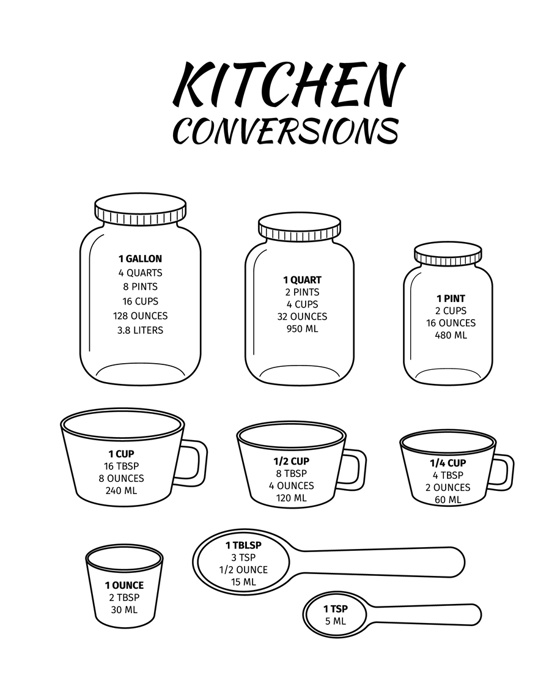
Many scaling challenges involve awkward measurements that become easier when basic kitchen conversions are understood. Knowing a few common relationships can simplify recipe adjustments considerably and reduce the amount of mental math required while cooking.
For example, three teaspoons equal one tablespoon, sixteen tablespoons equal one cup, and two cups equal one pint. Familiarity with these conversions allows cooks to quickly rewrite complicated measurements into more manageable forms. Keeping a simple conversion chart nearby can also save time when scaling recipes on the fly.
Keeping a recipe conversion calculator nearby can make it much easier to convert between teaspoons, tablespoons, cups, and larger units. These simple calculations become increasingly valuable as recipes grow larger. Instead of measuring nine teaspoons individually, you can recognize it as three tablespoons and work more efficiently. The more familiar you become with common conversions, the smoother and faster recipe scaling becomes.
Why Baking Doesn't Scale Like Everything Else
Cooking often allows room for flexibility, but baking is governed by chemistry. Ingredients perform specific functions, and changing their proportions can significantly affect the final result. Even small adjustments can have a noticeable impact on texture, structure, and appearance.
Leavening agents, fats, sugars, and liquids all interact in carefully balanced ways. A cake recipe that performs perfectly at one size may behave differently when doubled or halved. Changes in pan size, batter depth, and baking time can further affect how heat moves through the recipe and how well it bakes.
Because baking relies so heavily on ratios, precise measurements become especially important. Successful scaling requires understanding not only the math involved but also how ingredients contribute to the structure of the finished product. Accuracy becomes increasingly important as recipes become more complex.
How to Scale Eggs, Leaveners, and Tricky Ingredients
Certain ingredients require extra care during scaling because they influence texture and structure more dramatically than others. Eggs, baking powder, baking soda, salt, and spices often fall into this category. Small errors with these ingredients can produce noticeable changes in the final dish.
When a recipe requires part of an egg, beating the egg first and measuring the needed portion improves accuracy. Similarly, many bakers reduce the amount of baking powder or baking soda slightly when doubling recipes to avoid undesirable flavors or excessive rise. These small adjustments help maintain the intended balance of the recipe.
Seasonings deserve caution as well. Starting with slightly less salt or spice than the calculation suggests allows room for adjustment later. It's easier to add more seasoning than to correct an over seasoned dish, particularly when working with large batches where mistakes are more costly.
How to Convert Awkward Measurements Into Usable Amounts
Scaling recipes often produces measurements that seem impractical. Amounts such as 2⅔ tablespoons or 4½ teaspoons can slow down preparation and increase the risk of errors. Simplifying those numbers before you begin makes the cooking process much easier.
Converting those values into equivalent units makes measuring more manageable. A scaled ingredient listed as nine teaspoons can be rewritten as three tablespoons, while sixteen tablespoons can become one cup. Similar conversions help simplify ingredient lists before cooking begins and reduce unnecessary measuring steps.
For home cooks, simplifying measurements improves both speed and confidence. The fewer unusual numbers you need to manage during preparation, the smoother the cooking process becomes. Taking a few minutes to rewrite awkward amounts can make an entire recipe feel more approachable and organized.
How to Scale Large Batches Without Losing Accuracy
Scaling a recipe for a large event amplifies every small measuring error, so accuracy becomes more critical the higher your conversion factor climbs. A mistake that barely affects a small family dinner can become a major problem when preparing food for dozens of people. That's why experienced cooks rely on careful planning and precise measurements when working with large batches.
One of the best ways to improve accuracy is to switch to weight-based measurements in grams or ounces before multiplying ingredients. Volume measurements become less reliable as quantities increase, while a digital scale provides consistent results regardless of batch size. When scaling spices and seasonings, it's often wise to start at around 60% to 75% of the calculated amount and adjust gradually.
Equipment limitations matter just as much as ingredient measurements. Always check your bowl, mixer, and pan capacities before scaling a recipe. A batter or dough that fits comfortably in one bowl at its original size may become unmanageable when multiplied several times over. If necessary, divide the recipe into multiple smaller batches and consider doing a test run first. Catching a scaling issue early can save both ingredients and time.
Recipe Scaling Mistakes That Ruin the Final Dish
Even a small miscalculation can derail an entire batch, so knowing where scaling goes wrong helps you avoid the most common and costly errors. These mistakes consistently appear across both home and professional kitchens:
- Skipping the conversion factor and adjusting ingredients inconsistently
- Over salting by scaling seasonings linearly instead of starting at 60% and adjusting
- Ignoring baking powder ratios, which need 1.75× when doubling rather than 2×
- Making ingredient substitutions without recalculating density or volume differences
- Forgetting to adjust bake time after reducing a recipe, causing overbaking
Each mistake shares the same root cause: assuming scaling is purely mechanical. Seasoning, leavening, and ingredient substitutions all require judgment beyond simple multiplication. Catching these errors before you start saves both ingredients and time.
Conclusion
Recipe scaling is one of the most practical kitchen skills a home cook can develop. Whether you're preparing a smaller weeknight meal, or cooking for a large crowd, understanding conversion factors and measurement techniques helps you adjust recipes with confidence.
The more comfortable you become with kitchen math, conversions, and ingredient behavior, the more flexible you'll be in the kitchen. With the right tools, careful measurements, and a little planning, you can scale almost any recipe successfully and avoid the common mistakes that turn a great dish into a disappointing one.